Wedding invitations are one of the first “real” wedding details that make everything feel official. They’re beautiful, sentimental, and they set the tone for your day before a single guest even arrives.
But here’s what most couples don’t realize until it’s almost too late: your invitation wording and timing directly affect your wedding day photo timeline. And not in a small way—this can impact when you get married, how much daylight you have for portraits, whether you feel rushed, and even how smooth your ceremony and reception flow.
So if you’re wondering what to put on your wedding invitation, what time to list, and how to make sure your day still feels relaxed and romantic (with plenty of time for the good photos), this is your guide.
What Goes on a Wedding Invitation? (The Must-Haves)
A wedding invitation doesn’t need to be complicated, but it does need to be clear. The most important goal is to communicate the details in a way that helps your guests arrive on time and helps your wedding day run smoothly.
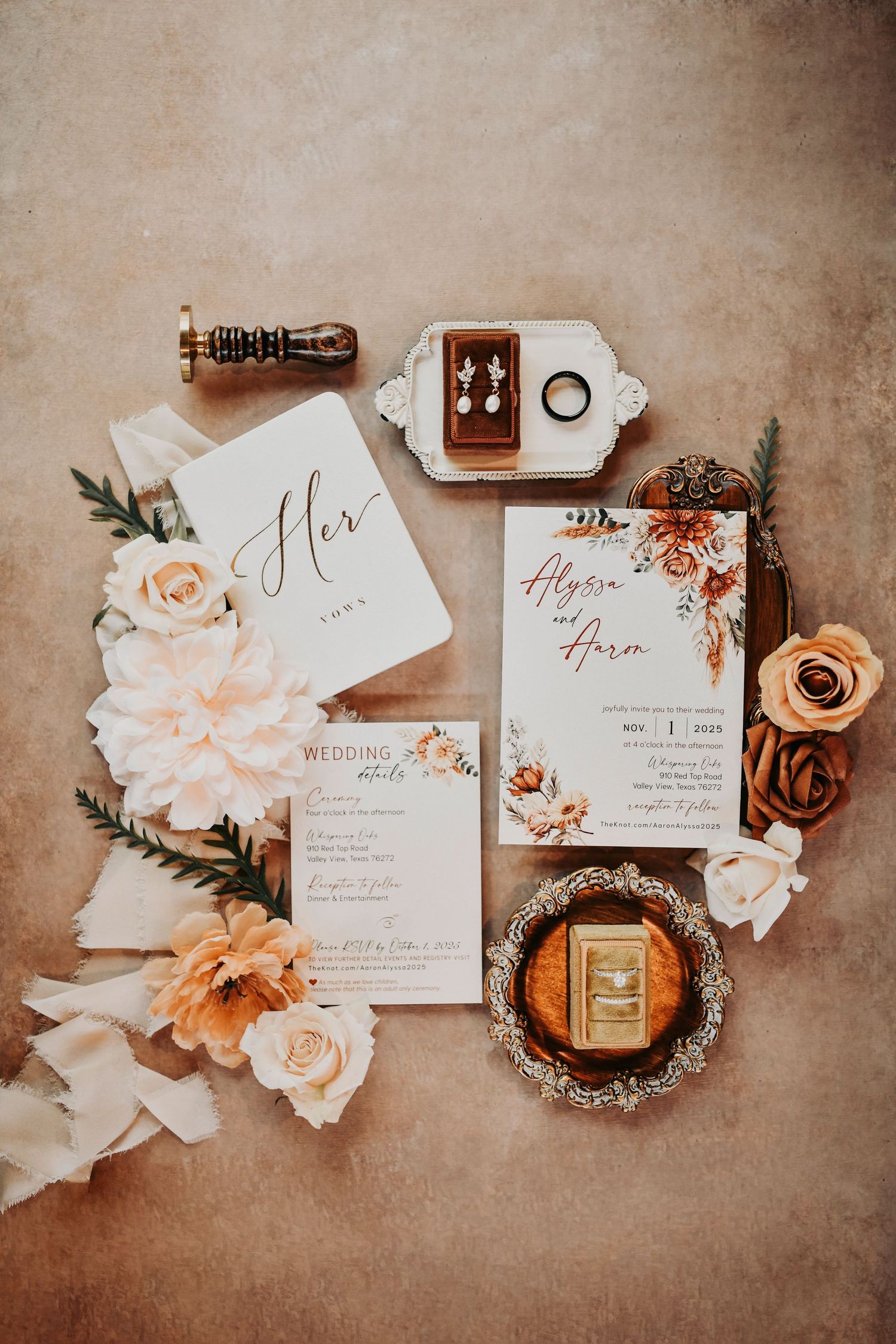
Here’s what should be included on your invitation suite.
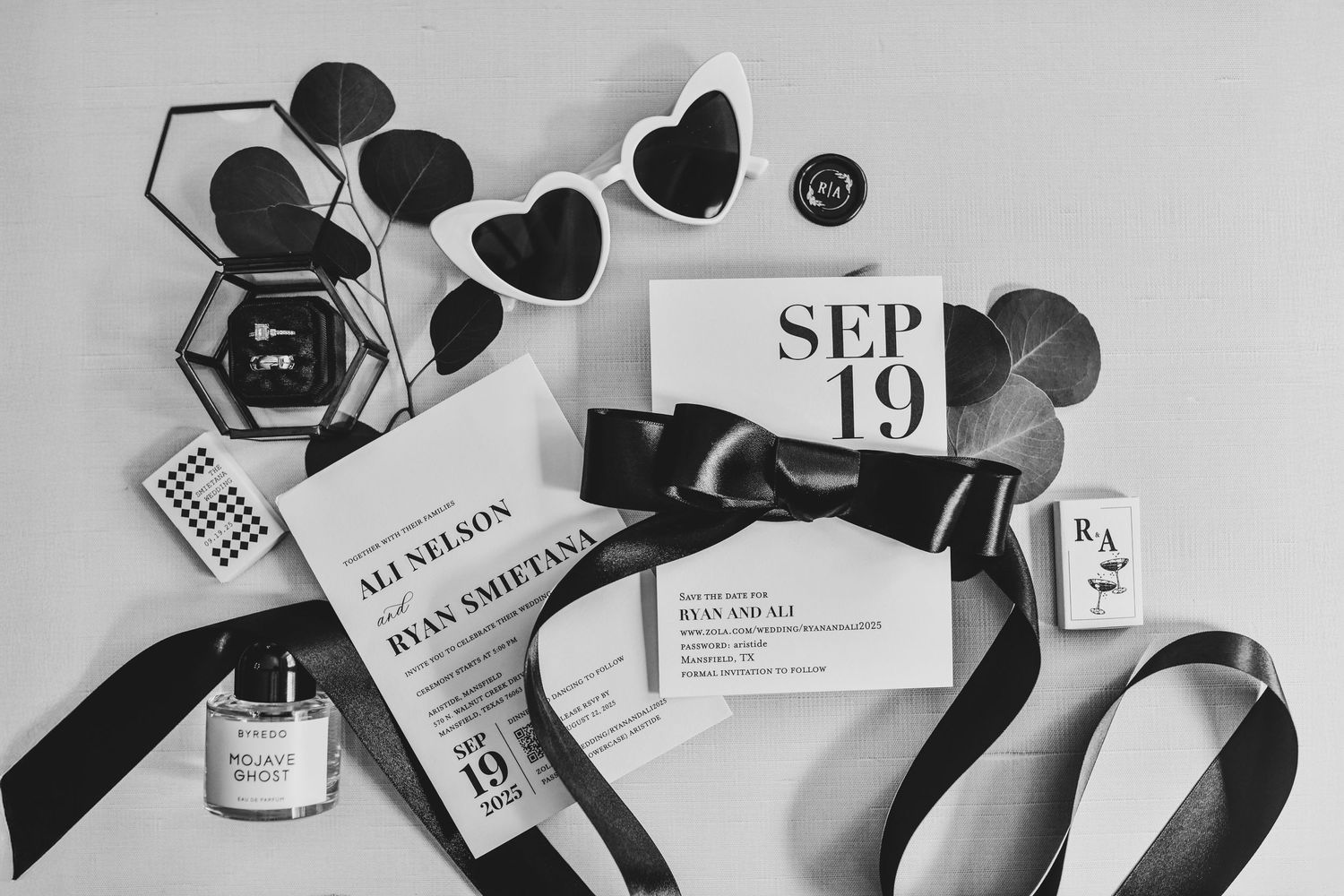
An Aristide invitation suite—timeless details that set the tone for the entire day.
1) The Hosts (Who’s Inviting the Guests)
Traditionally, wedding invitations start with the host line—usually the parents of the bride, parents of the groom, or the couple themselves.
Examples:
- “Together with their families…”
- “Mr. and Mrs. ____ request the honor of your presence…”
- “____ and ____ invite you to celebrate their wedding…”
This piece doesn’t impact your photo timeline much, but it sets the formality level. That formality can influence how guests show up and how your day feels overall.
2) Your Names (The Stars of the Show)
Include both of your names exactly as you want them announced and remembered. This seems obvious, but it’s also a detail that affects your wedding branding, signage, and even how your vendors label your galleries and deliverables.
If you’re using first + last names, keep it consistent across:
- invitations
- programs
- wedding website
- signage
- seating chart
Consistency makes your day feel polished and intentional.
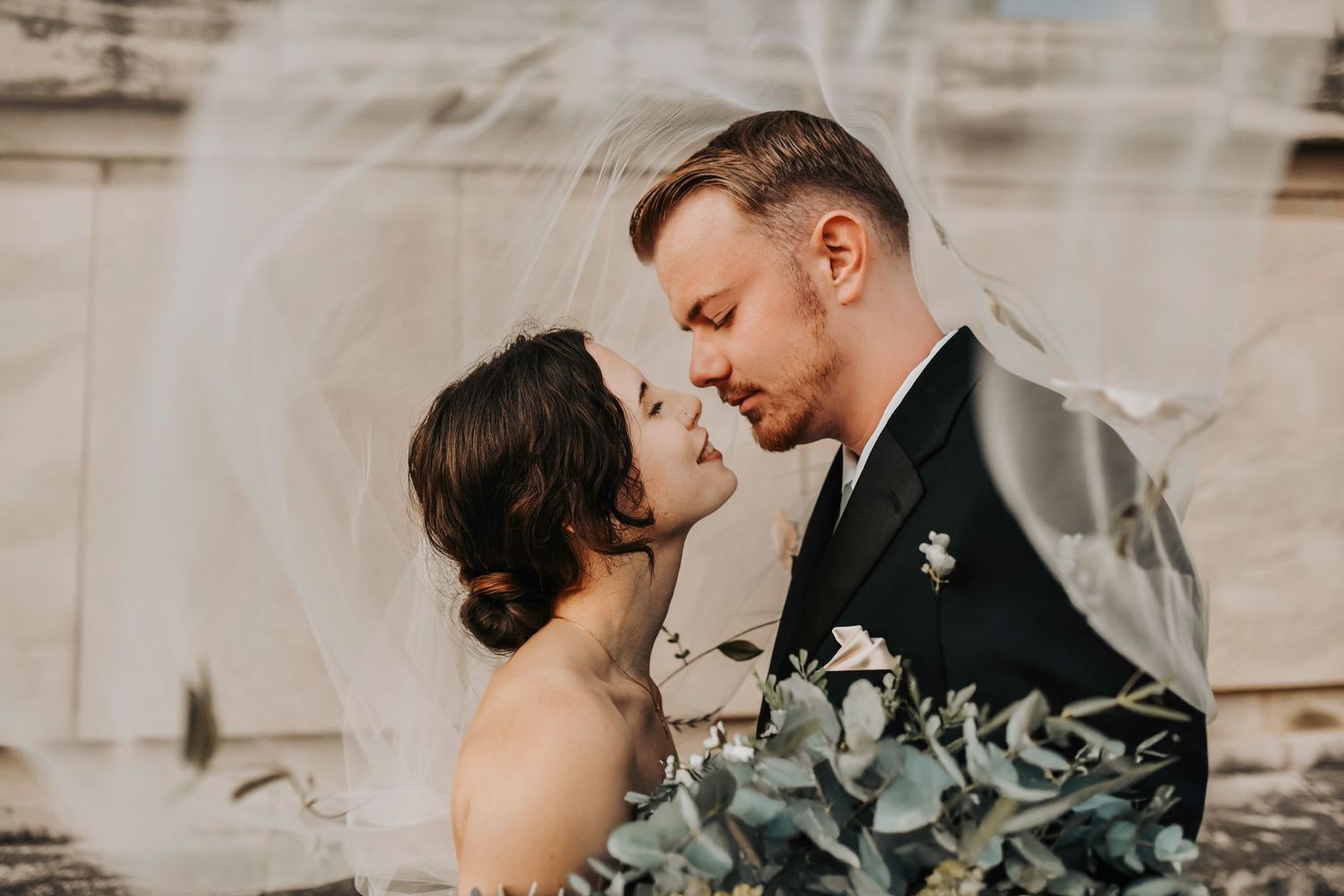
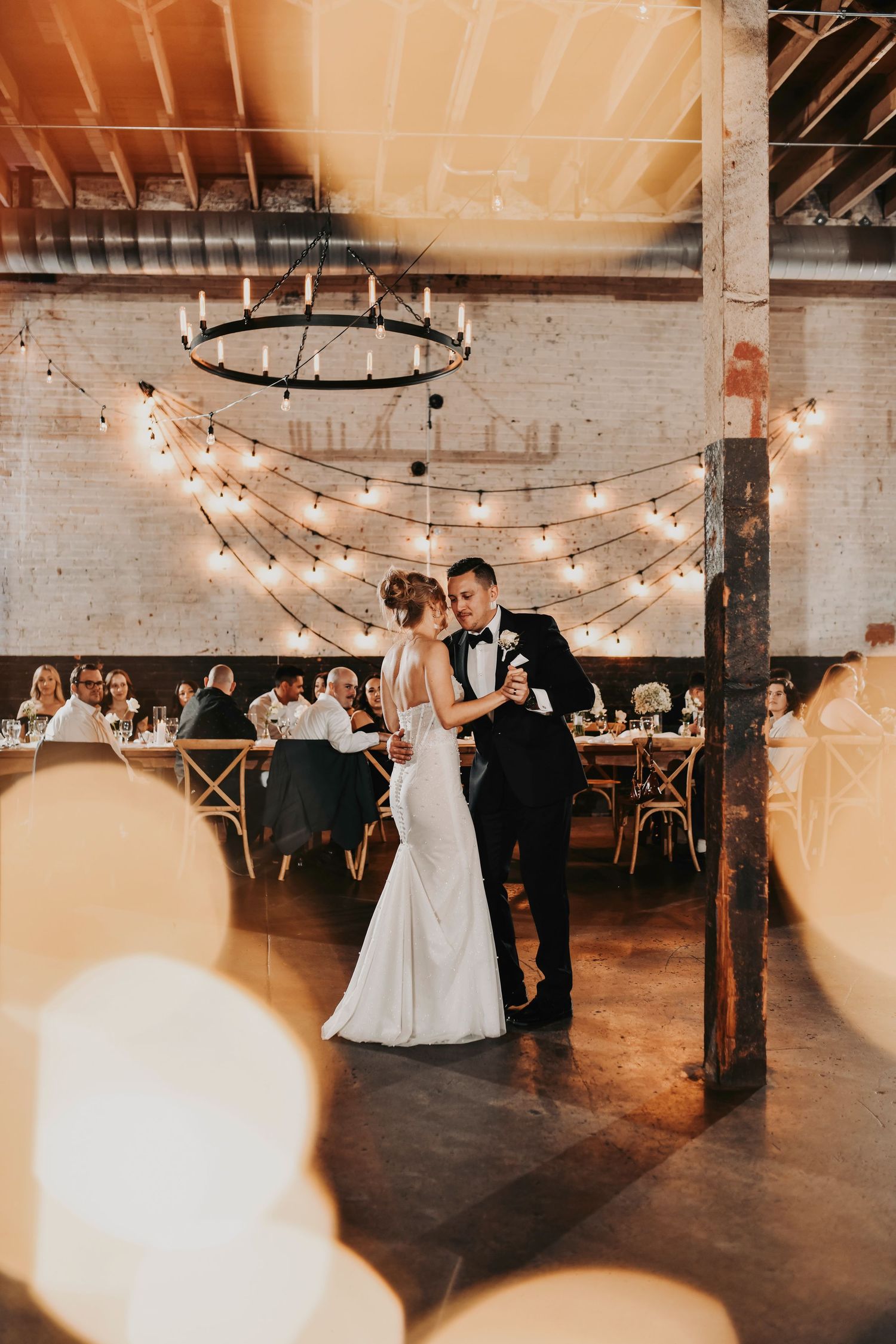
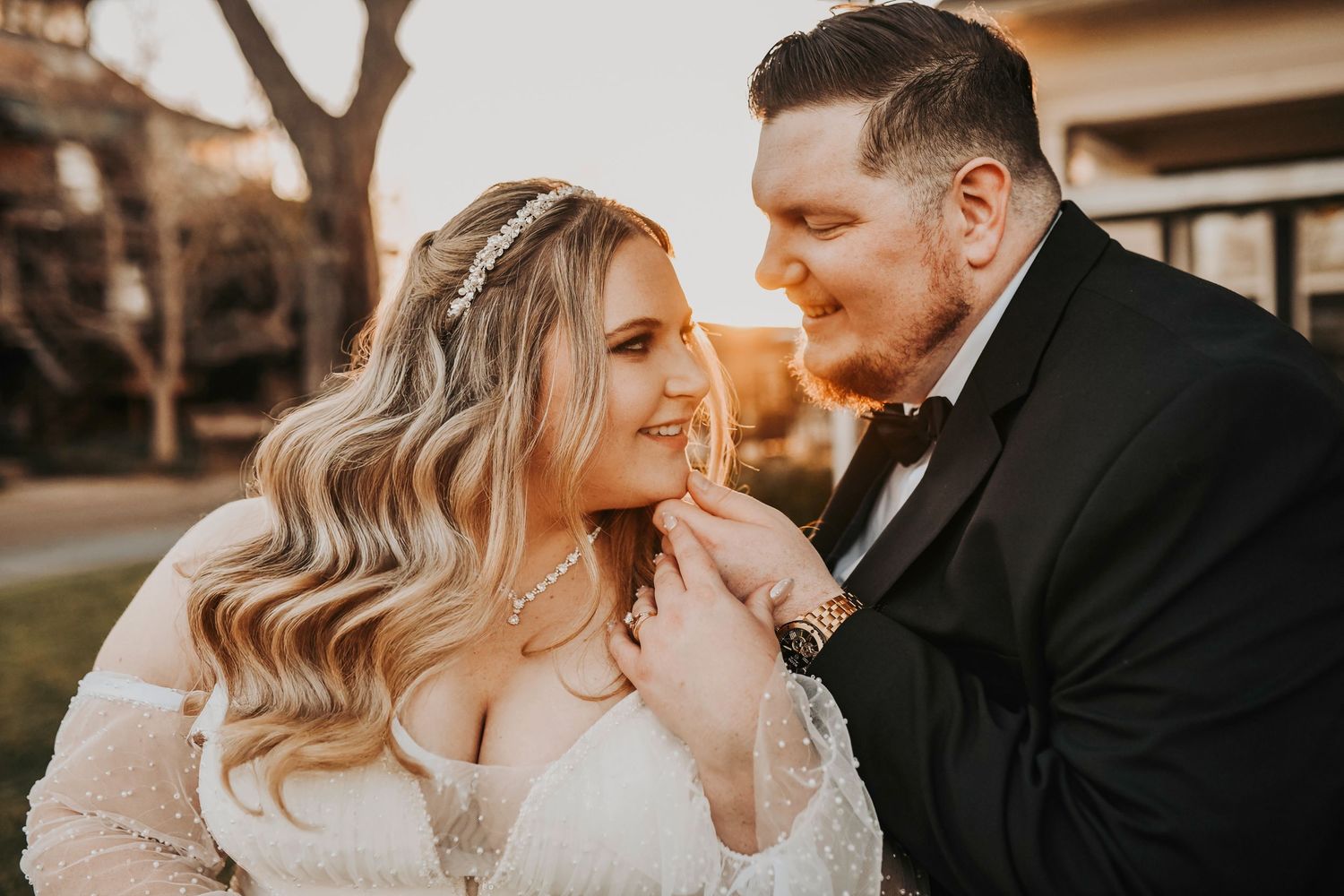
A quiet kiss, right in the middle of the magic. Sunago Bell, Denton
3) The Date
Include the full date in a clear format. Many invitations spell it out fully, which is beautiful and traditional.
Examples:
- “Saturday, the tenth of October”
- “Saturday, October 10, 2026”
This won’t affect your photo timeline, but it affects guest clarity and travel planning.
4) The Location (Venue Name + City/State)
Your invitation should include:
- venue name
- city and state
- optional street address (sometimes this goes on a details card instead)
If your venue has multiple ceremony spaces (or the ceremony and reception are in different places), make sure the invitation suite makes that clear.
This matters for photos because travel time between locations affects:
- the buffer needed for portraits
- the time you need for family photos
- how much “breathing room” you have in the schedule
5) The Actual Ceremony Time (This Is Non-Negotiable)
This is the biggest one, bestie. I’m going to say it as clearly as possible:
Always include the actual ceremony start time on your wedding invitation.
Not “arrive at 4:00 for a 4:30 ceremony.”
Not “doors open at 4:00.”
Not “be seated by 4:15.”
The invitation should list the real ceremony time.
Example:
- “Ceremony begins at 5:30 PM”
Why you should never list an earlier time “to make guests show up on time”
Because it backfires. Every time.
When you tell guests a time that isn’t real, a few things happen:
- Some guests show up at the fake time and wander around confused.
- Some guests still show up late… now they’re late for the fake time and even later for the real one.
- Guests start texting you or your coordinator asking what’s happening.
- It creates unnecessary chaos right before your ceremony.
And chaos right before the ceremony is the fastest way to mess with your photo timeline.
How this impacts your wedding day photo timeline
If guests arrive too early, they’re more likely to:
- be in the background of pre-ceremony portraits
- interrupt private moments
- crowd ceremony spaces while you’re trying to stay hidden
- create noise and distractions while you’re getting ready
If guests arrive too late, it can cause:
- ceremony delay
- rushed family photos afterward
- less time for couple portraits
- pushing dinner later (which affects everything after)
So the best solution is simple: tell the truth on the invite. Then let your planner/coordinator manage guest arrival.
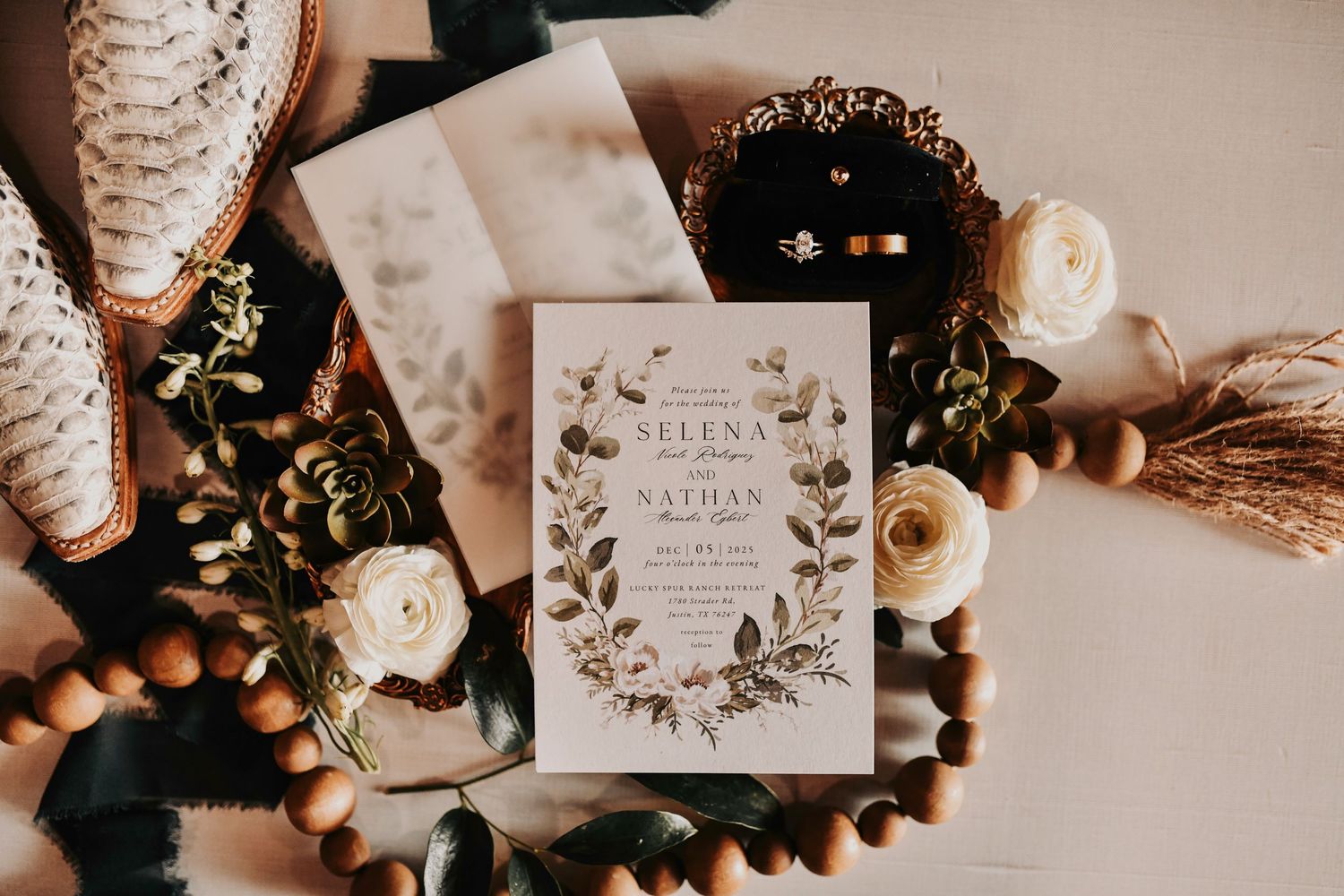
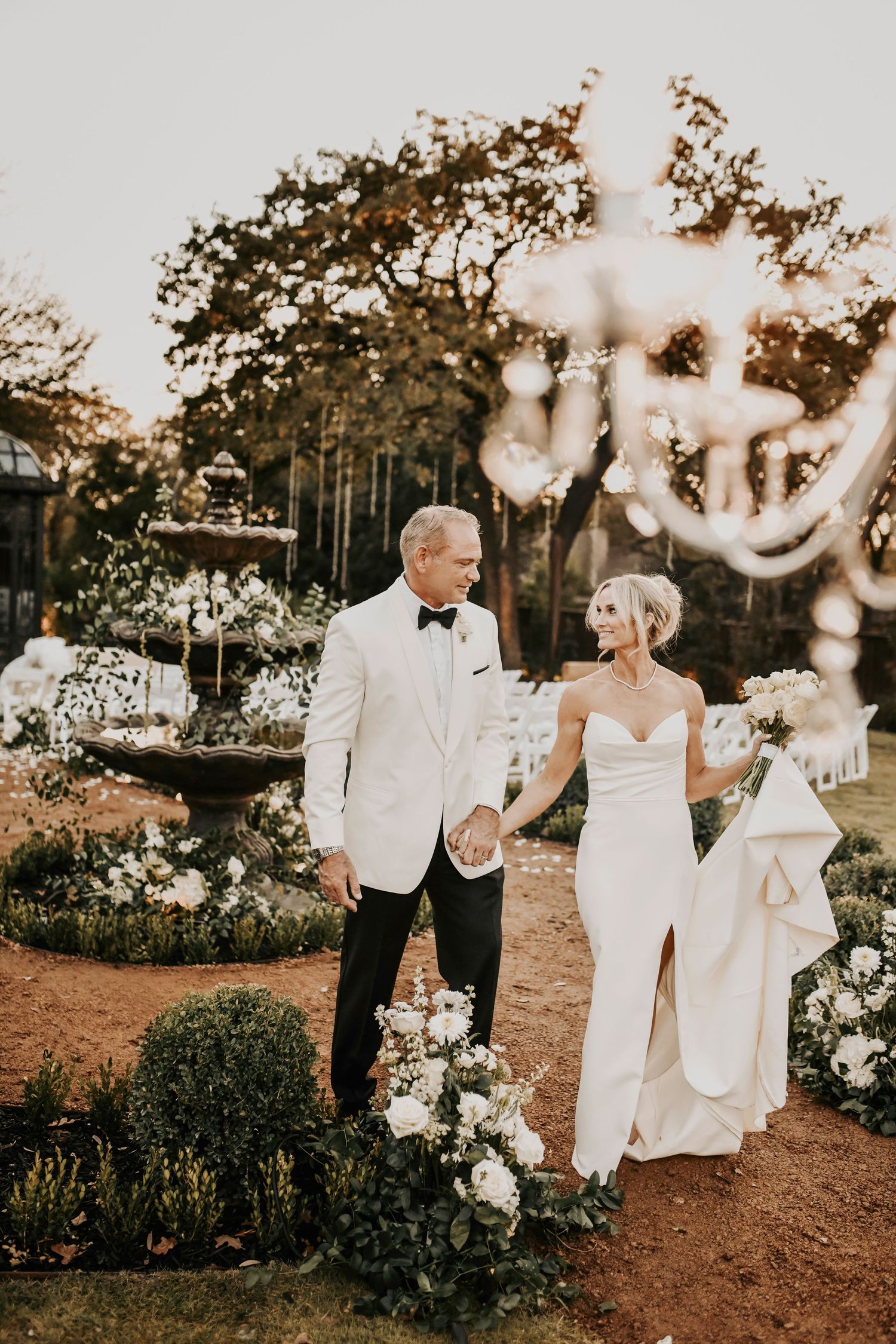
Wedding details with a refined Texas edge. Lucky Spur Ranch
6) Dress Code (If It Matters to You)
If your wedding is formal, black tie, cocktail attire, or themed, include it on the details card or wedding website.
This isn’t just about aesthetics—dress code influences:
- how guests feel in photos
- how cohesive your crowd looks in ceremony + reception shots
- whether guests are comfortable outdoors (heat/cold)
If your wedding is outdoors, it’s also helpful to include a small note on your details card like:
- “Ceremony will be held outdoors on grass.”
- “Bring a light jacket for the evening.”
Happy guests photograph better. That’s just real life.
7) RSVP Details (Deadline + How to Respond)
Most couples include RSVP info either on a separate RSVP card or through their wedding website.
Key things:
- RSVP deadline (2–4 weeks before wedding day is common)
- RSVP method (mail-in card or online)
- meal selection (if needed)
RSVP timing affects your photo timeline because it impacts:
- seating chart completion
- final headcount
- reception layout
- whether you’ll have surprise extra guests (which can throw off dinner service timing)
8) Reception Information (If It’s in a Different Place or Time)
If your reception is immediately after the ceremony at the same venue, you may not need much detail.
But if it’s:
- a different location
- a later start time
- a cocktail hour situation
- include that clearly.
Example:
- “Reception to follow”
- “Dinner and dancing to follow”
- “Cocktail hour begins at 6:00 PM”
The Invitation Timeline Mistake That Can Ruin Your Wedding Photos
This one is so important, and I want you to hear it early enough to save you stress:
Do not choose your ceremony time without talking to your photographer first.
Your ceremony time isn’t just about guest convenience—it’s about light.
Light determines:
- how your portraits look
- whether your ceremony is squinty and harsh or soft and romantic
- how much time we have for golden hour photos
- whether your timeline feels relaxed or rushed
Photographers build timelines around light, and your ceremony time is the anchor that affects everything else.
How Your Invitation Time Affects Your Wedding Day Photo Timeline
When you put a ceremony time on your invitation, you’re locking in the rhythm of your entire day.
Here’s how it impacts your photography timeline:
If the ceremony time is too early
You might get:
- harsh overhead sunlight (especially in summer)
- strong shadows on faces
- squinting during vows
- less romantic portrait lighting
- extra heat stress (which shows up in photos)
If the ceremony time is too late
You might get:
- rushed family photos after ceremony
- fewer couple portraits
- sunset happening during dinner
- night portraits only (which can be stunning, but it changes the vibe)
The goal is to create a ceremony time that allows:
- a calm morning
- plenty of time for getting ready photos
- a smooth first look (if you’re doing one)
- relaxed pre-ceremony portraits
- a ceremony in flattering light
- golden hour portraits
- a reception timeline that doesn’t feel like a sprint
The Best Ceremony Time for Stunning Wedding Photos (The Golden Rule)
If you want romantic, glowy, editorial wedding photos, this is the simple guideline:
Plan your ceremony about 2 hours before sunset.
That usually gives us:
- time for post-ceremony family photos
- time for wedding party photos
- time for couple portraits during golden hour
- time for you to actually enjoy cocktail hour
This is one of the biggest “secret ingredients” to wedding days that feel calm and photograph beautifully.
Bonus: What Time Should You Get Married When the Sun Sets Earlier vs Later?
Sunset time changes dramatically depending on the season. That’s why a ceremony time that worked for your friend’s June wedding might not work for your November wedding.
Here’s the seasonal breakdown:
When the Sun Sets Later (Spring + Summer)
In late spring and summer, sunset is later, which gives you more flexibility. You can have a later ceremony and still get golden hour portraits.
Typical benefits:
- more daylight
- warm, glowy portraits
- longer evenings
But summer comes with challenges too:
- harsh midday sun
- extreme heat
- sweaty faces and shiny skin
- squinting during outdoor ceremonies
Best photo-friendly approach for late sunsets
Even if sunset is late, you still want to avoid the harshest light of the day. A later ceremony is usually more flattering.
If you’re getting married outdoors in summer, a later ceremony often creates:
- softer light
- happier guests
- more comfortable portraits
When the Sun Sets Earlier (Fall + Winter)
Fall and winter weddings are gorgeous, cozy, and often more comfortable temperature-wise. But the light disappears fast.
Typical challenges:
- less time for portraits
- earlier golden hour
- night comes quickly
Best photo-friendly approach for early sunsets
When sunset is earlier, you’ll want to move your ceremony earlier so we can still capture:
- ceremony in daylight
- family photos with natural light
- golden hour couple portraits
If you want that warm, romantic glow in your portraits, we need to plan around the sun—not the clock.
The Timeline Trick That Makes Everything Feel Relaxed
If you want the day to feel calm and not like you’re constantly being pulled in ten directions, the key is padding.
Build buffer time into your wedding day timeline
Buffer time protects:
- your peace
- your hair and makeup schedule
- travel delays
- family photo organization
- sunset portraits
And it protects your photo gallery from feeling rushed.
Because rushed wedding days lead to:
- fewer candid moments
- less time for detail shots
- shorter portrait time
- stress showing up on faces
And you deserve better than that.
A Quick Example: Why Ceremony Time Changes Everything
Let’s say your ceremony is at 4:00 PM, but sunset is at 5:15 PM.
That gives us a tight window for:
- ceremony (30 minutes)
- family photos (20–30 minutes)
- wedding party photos (15–20 minutes)
- couple portraits (15–25 minutes)
Suddenly everything becomes rushed, and golden hour disappears in a blink.
Now imagine the ceremony is at 5:00 PM with a 7:15 PM sunset.
That gives us:
- softer ceremony light
- a calmer pace
- golden hour portraits after family photos
- more relaxed couple time
Same venue. Same photographer. Completely different outcome.
Invitation Suite Extras That Help Your Wedding Day Run Smoothly
While the main invitation should stay clean and clear, the rest of the invitation suite can include details that keep guests informed (and keep your day running on time).
Consider including a details card with:
- parking instructions
- attire guidance
- unplugged ceremony note
- wedding website link
- reception info
- transportation info
- “adults only” note (if applicable)
The more informed your guests are, the fewer interruptions you’ll have—and the smoother your timeline stays.
My Photographer Advice: Talk to Your Photographer Before You Finalize Your Invitation Design
This is one of the most overlooked steps.
Before you send invitations to print, ask your photographer:
- Does this ceremony time work with sunset?
- Will we have enough light for portraits?
- Should we do a first look to protect portrait time?
- How long should family photos take with our family size?
- What’s the best timeline flow for our venue layout?
Because once the invitations go out, your ceremony time becomes much harder to change.
And when the timeline is planned intentionally from the beginning, you get:
- more candid moments
- more relaxed portraits
- better light
- more time together
- a wedding day that feels like you can breathe
.
Final Thoughts: The Invitation Isn’t Just Paper—It’s the Start of Your Timeline
Your invitation tells guests where to be and when. But it also quietly sets the pace for your entire wedding day.
When you:
- include the real ceremony time
- avoid asking guests to come early
- choose a ceremony time based on sunset and photography
- talk to your photographer before finalizing details
You’re setting yourself up for a wedding day that feels smooth, beautiful, and genuinely enjoyable.
And the best part? Your photos will reflect that ease.
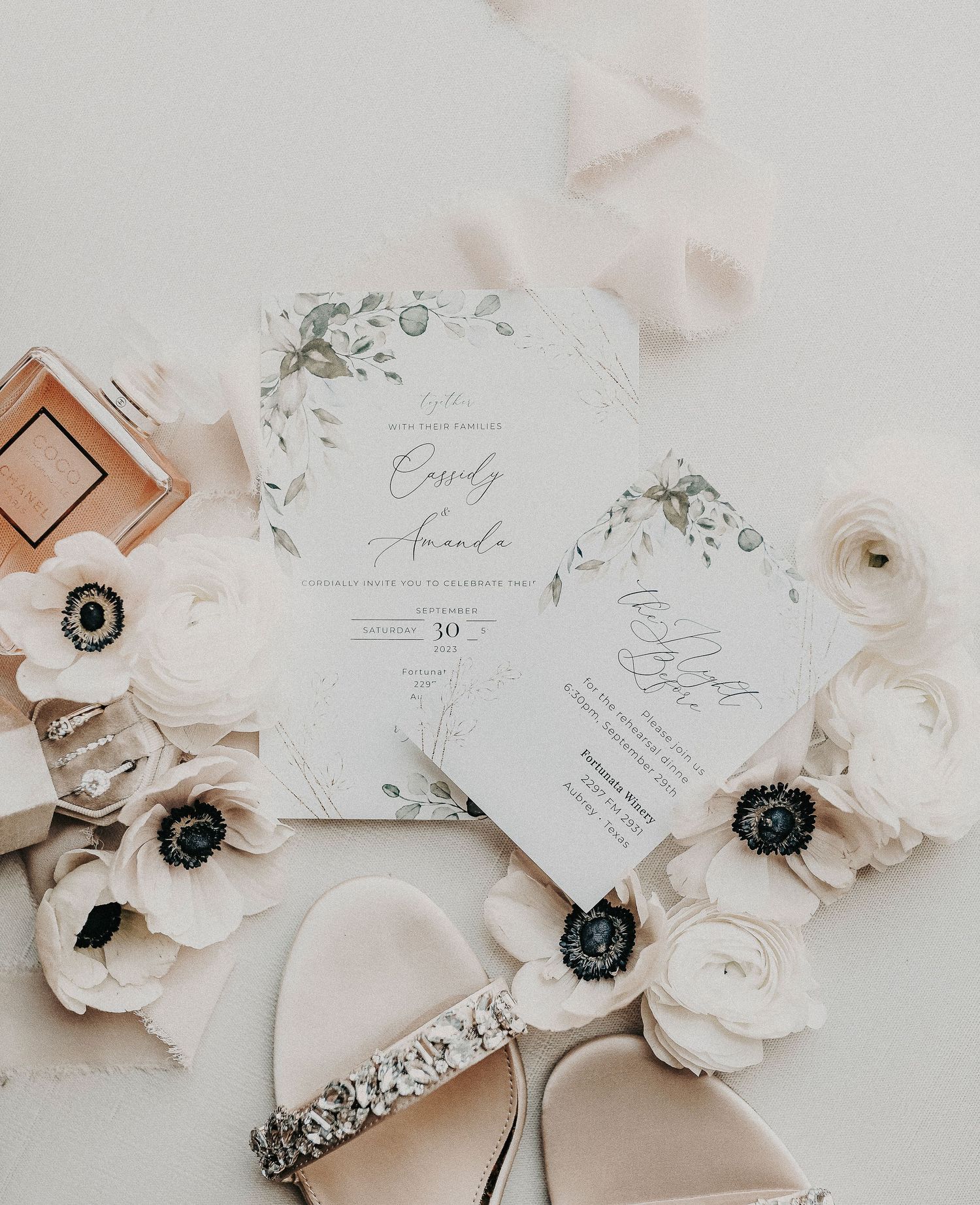
With the essentials finalized, here are a few trusted places to design wedding invitations that feel elevated, timeless, and beautifully simple.
A few favorite places to design and order invitations:
- Minted – elevated designs, luxe paper options, and a very classic-meets-modern feel
- Zola – clean and modern with matching wedding websites and easy customization
- The Knot Invitations – huge variety of styles and a popular go-to for couples
- Papier – chic, minimal, editorial designs with a high-end vibe
Want Help Building a Wedding Photo Timeline That Feels Effortless?
If you’re planning your wedding in the Dallas–Fort Worth area and want wedding photos that feel romantic, editorial, and full of real emotion, I’d love to help you create a timeline that protects the light and your peace.
Reach out to book your wedding photography (and film!) with April Pinto Photography, and let’s make sure your day flows beautifully from the first detail to the final dance.
